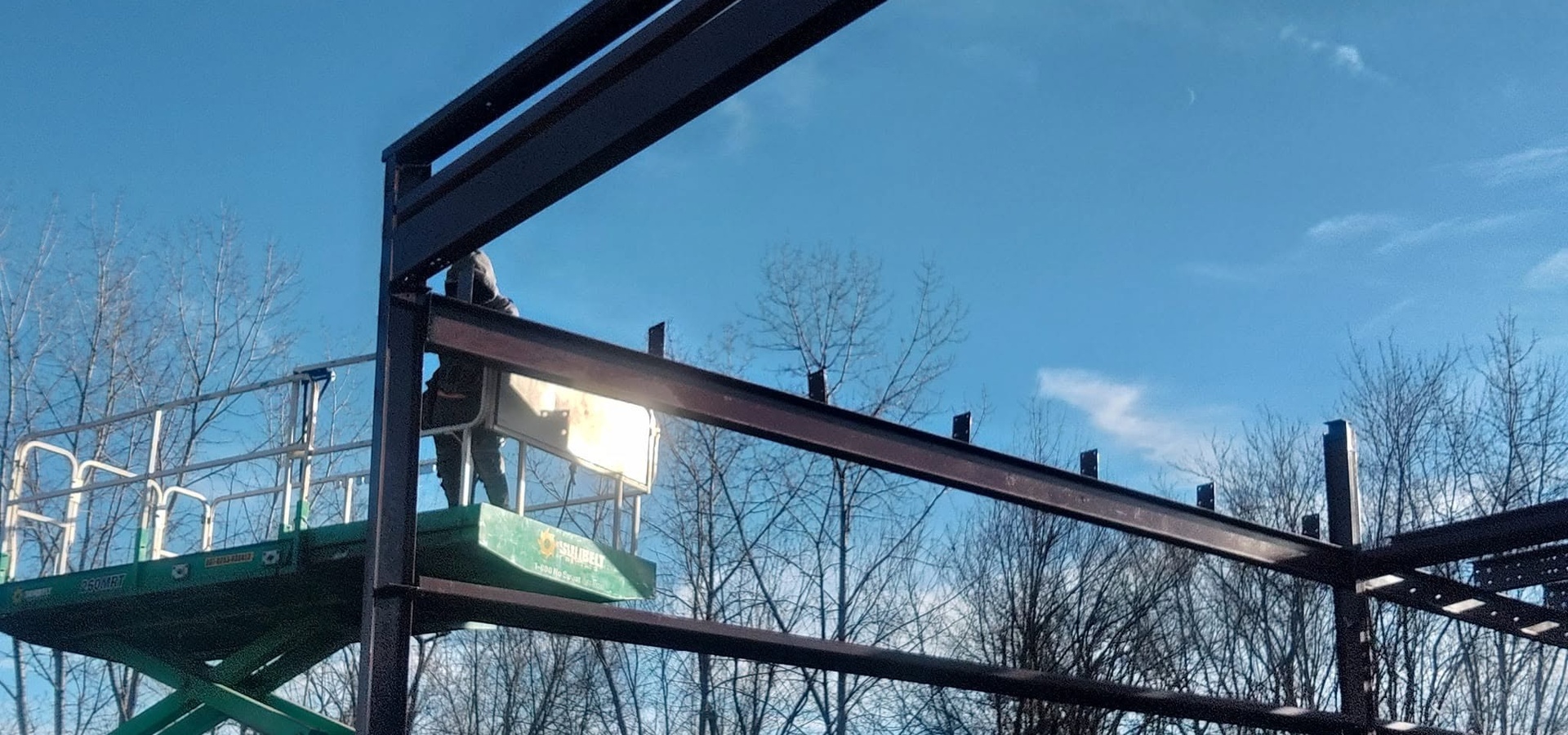
What Is Structural Steel Fabrication and How Does It Work?
Structural steel fabrication involves cutting, shaping, drilling, welding, and assembling steel components for buildings, industrial facilities, commercial structures, and other construction projects. Fabricators transform raw steel into beams, columns, frames, supports, platforms, and custom components that construction teams can install at the jobsite.
Because structural steel provides strength, durability, and design flexibility, contractors commonly use it for warehouses, manufacturing facilities, commercial buildings, agricultural structures, and industrial projects throughout Pennsylvania.
What Does Structural Steel Fabrication Include?
Structural steel fabrication starts with engineered drawings and project specifications. These documents identify the required dimensions, connection points, steel grades, and installation requirements for each component.
A fabrication shop then prepares the steel according to those plans. Depending on the project, fabricators may:
- Cut steel beams, plates, angles, and channels
- Drill or punch holes for bolts and connections
- Weld components together
- Add brackets, stiffeners, base plates, and supports
- Grind and finish welded areas
- Apply protective coatings when required
- Prepare completed components for delivery and installation
Fabricators must produce every piece accurately so construction teams can install the components properly.
How Does the Process Work?
1. Project Review and Planning
The fabrication team reviews drawings, measurements, load requirements, and installation details before production begins. The team identifies the required materials, equipment, connection methods, and production schedule during this stage.
Clear planning helps the team reduce errors and keep the project aligned with construction deadlines.
2. Steel Selection and Preparation
The fabrication team selects the correct steel type, size, thickness, and grade based on the project specifications. Raw materials may include structural beams, steel plates, tubing, channels, and angles.
The team inspects and organizes the materials before processing begins to ensure they meet project requirements.
3. Cutting and Processing
Fabricators cut steel components to the required dimensions using equipment suitable for the material and project. They may also drill, punch, cope, bevel, and prepare connection points during this stage.
Accurate steel processing plays an important role because even small measurement errors can create installation problems at the jobsite.
4. Fitting and Assembly
Fabricators position and temporarily fit the cut components together. They check measurements, angles, alignment, and connection points before they begin permanent welding.
This step allows the fabrication team to confirm that each component matches the approved drawings.
5. Welding and Joining
Qualified welders permanently join the steel components using the required welding procedures. Structural welders may attach plates, braces, brackets, columns, frames, and other supporting elements during this stage.
High-quality welding helps structural components safely handle weight, movement, vibration, and environmental conditions.
6. Inspection and Quality Control
The inspection team checks completed components for correct dimensions, weld quality, alignment, and overall workmanship. Inspectors follow the requirements outlined by the project specifications, engineering plans, and applicable construction standards.
Quality control helps the fabrication team ensure that each component meets project requirements and performs as intended.
7. Delivery and Installation
After completing fabrication and inspection, the team prepares the structural steel components for transportation. The team then delivers the components to the construction site for erection, bolting, welding, or final assembly.
Some projects also require mobile welding services to complete field connections, repairs, modifications, or reinforcement work on site.
Common Applications
Structural steel fabrication supports many commercial and industrial applications, including:
- Building frames
- Steel columns and beams
- Equipment platforms
- Stair systems and railings
- Mezzanines
- Support structures
- Loading areas
- Industrial additions
- Steel reinforcement
- Custom structural components
Fabrication also helps contractors modify, repair, or reinforce existing steel structures when a project requires additional support or structural changes.
Why Use Steel for Construction?
Structural steel offers several important advantages. It can support heavy loads, provide flexible design options, and meet the needs of both simple and complex construction projects.
Fabricators also produce steel components in a controlled shop environment before transporting them to the jobsite. Accurate fabrication can improve installation efficiency, reduce delays, and help construction teams maintain consistent project quality.
Serving Commercial and Industrial Projects in Pennsylvania
Choosing an experienced structural steel fabrication company can improve project accuracy, safety, and long-term performance. The right contractor should understand fabrication drawings, structural welding requirements, steel processing, field installation, and commercial construction schedules.
Mobile Welding Solutions provides structural steel fabrication, industrial welding, steel processing, and mobile welding services for commercial and industrial projects throughout Pennsylvania.
Request a Quote
Planning a structural steel project, repair, or commercial installation? Contact Mobile Welding Solutions to discuss your drawings, specifications, timeline, and fabrication requirements.
